When the Machine Does the Thinking: What Is Really At Stake
Parents tell us the same story again and again: a teen is hunched over a laptop late at night, stuck on algebra or geometry, with a clock ticking and a deadline looming. Instead of wrestling with the problems, they paste the question into an AI tool, copy the steps, and submit the assignment. The grade looks fine, but the next quiz feels like a brick wall.
That shortcut is tempting, and we understand why. Math homework can be stressful, and AI tools make it incredibly easy to get a neat, step-by-step solution. The problem is that most of the real learning in math happens inside the struggle your teen just skipped. Math is not just about answers; it is about skills, reasoning, and patterns that build over time.
In this article, we will unpack how overreliance on AI quietly hurts your teen’s learning, grades, and confidence, and why options like online math tutoring for high school students give a healthier path to mastery.
What Really Happens in the Brain When AI Does the Work
Math learning is an active process. When teens try a problem, get stuck, back up, and try again, their brains are literally building new connections. That messy process is how they move from just following steps to actually understanding why those steps work.
When AI hands them a complete solution, it can feel like they are learning. They see the steps, the explanations, and a clean final answer. But reading a solution is not the same as producing it. Often, students skim the explanation, copy the structure, and tell themselves they will understand it later. Because they did not wrestle with the reasoning, very little sticks.
Over time, this creates dependency. The more a teen leans on AI to start, guide, and finish problems, the less confident they feel doing any part of the work alone. Instead of, “I can figure this out,” the inner voice becomes, “I can only do this if my AI tool is open.”
That loss goes far beyond a single assignment. Math persistence, logical thinking, and step-by-step problem-solving are the same skills that help with science labs, coding projects, and everyday decisions, from budgeting to comparing options. Those skills only grow when the student is the active thinker, not the passive copier.
The Hidden Academic Costs of AI-Completed Homework
When homework looks correct, teachers naturally assume the class is ready to move on. If your teen’s perfect homework is really AI’s work, the teacher may speed ahead while your teen sits quietly confused. They know the answers on paper are not their own thinking, so they are less likely to ask questions.
That gap shows up fast on quizzes, Regents exams, and AP tests where AI tools are not allowed. Students who have been coasting on AI-generated homework often freeze when they face similar problems without their “helper.” The result can be a painful mismatch: homework grades look strong, but test scores tell a different story.
This pattern also erodes the foundation for future math. If AI did most of the real thinking in algebra and geometry, precalculus and calculus can feel almost impossible. Concepts build on each other. When earlier blocks are missing, everything on top wobbles.
There is also an academic integrity side that parents sometimes underestimate. It might feel like “just getting help,” but in many classrooms and colleges, submitting AI-generated work as your own falls under cheating. Once a teen gets used to that blurred line, it can be hard to pull back in higher-stakes situations.
Emotional Fallout: Confidence, Motivation, and Avoidance
The emotional cost of AI overuse is easy to miss. On paper, your teen might look fine. In their head, it can feel very different. They see decent grades, but they know how often an AI tool “saved” them, so they start to feel like a math impostor.
That creates a constant undercurrent of anxiety. They worry about being called on in class or asked to explain a step they never really understood. High-stakes exams can feel terrifying, because those are the moments when there is nowhere to hide and no AI to lean on.
Over time, many teens respond by checking out. If math feels impossible without technology, it is natural to decide, “I just am not a math person.” Once that belief settles in, motivation drops, and they avoid challenging courses or opportunities that use math, even if they might have been fully capable with the right support.
This matters for their future. So many paths, from STEM careers to business, economics, and social sciences, require real comfort with quantitative thinking. When AI shortcuts replace real learning, doors close that did not need to close.
When and How AI Can Actually Help Math Learning
We are not anti-technology. AI can be a helpful learning assistant if it is used with intention. The key is whether your teen is doing the thinking first, and using AI as support, not as a replacement.
Healthy AI use might look like this:
- Your teen attempts the problem on their own before opening any tool.
- They use AI to check their final answer, not to generate it from scratch.
- They ask for hints or a quick reminder of a concept, then turn back to their work.
- They compare an AI solution to their own, looking for differences and asking, “Why did this method work?”
Families can set simple house rules that preserve learning:
- Try every problem for a set number of minutes before using AI.
- No copying full solutions; only use AI after writing your own attempt.
- Use AI to get alternative explanations when class notes are not clear.
Even when AI is used wisely, teens benefit from human guidance, especially in challenging courses like algebra, geometry, precalculus, and calculus. A tool can show steps, but it cannot truly see where a student is confused or why they keep making the same mistake.
Why Human Tutors Beat Algorithms for Real Math Growth
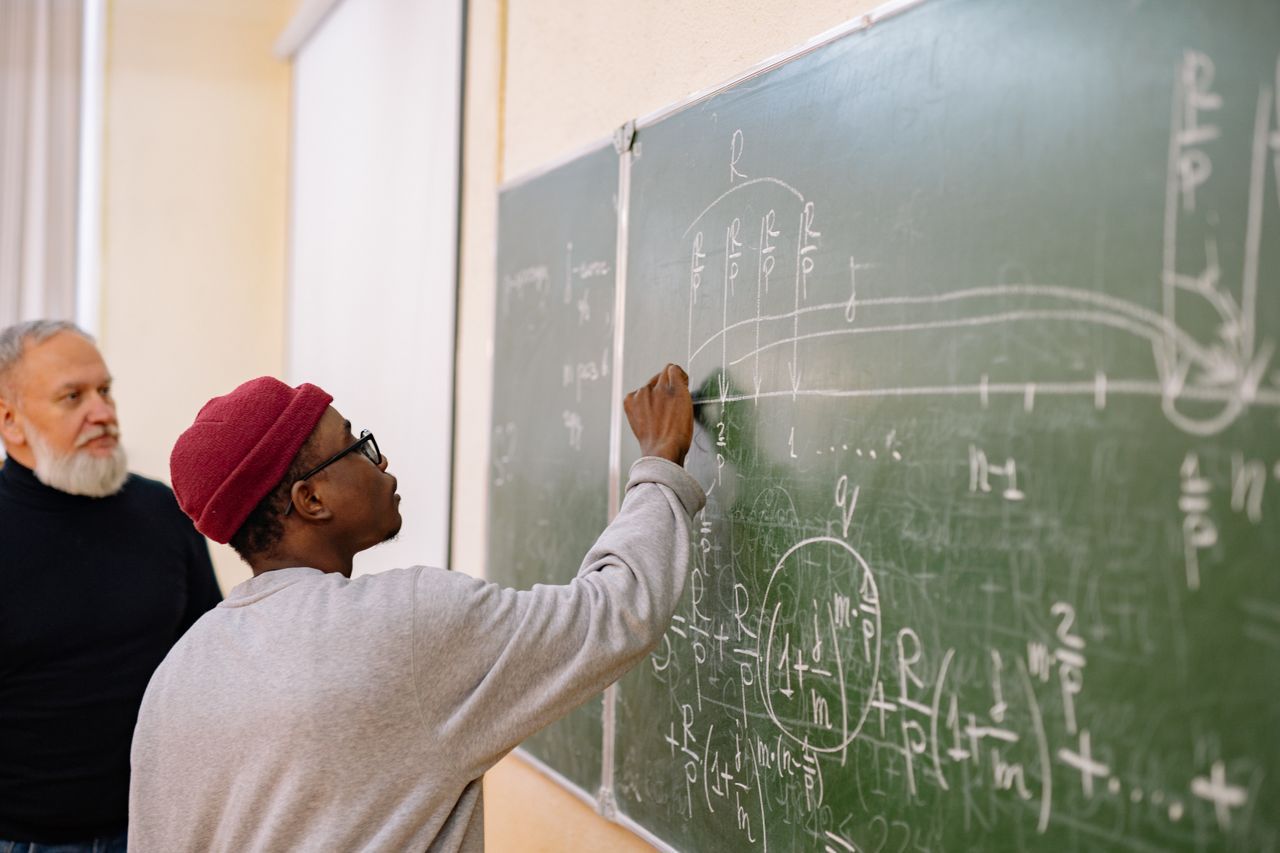
This is where human tutoring makes a real difference. AI gives generic explanations based on patterns. A skilled tutor, especially an experienced high school math teacher, listens to how a student thinks, spots misconceptions, and adjusts the explanation in real time.
That back-and-forth conversation is powerful. When a student talks through a problem, asks follow-up questions, and gets immediate feedback, they are practicing the exact mental moves they will need in class and on exams. It is active, not passive. Instead of, “Here are the steps,” it becomes, “Let us figure out together why this step makes sense.”
Structured online math tutoring for high school students also builds habits that AI cannot. Regular sessions create a routine, so math is not just a last-minute crisis. A tutor can help a teen:
- Preview upcoming topics so class feels more manageable.
- Review weak spots before big tests like Regents and AP exams.
- Learn problem-solving strategies instead of memorizing one-off tricks.
At Math Exceed, founded by experienced high school math teachers in Hewlett, NY, we center our tutoring on the expectations students actually face in school, including Regents and AP math courses. Our goal is not just finishing homework; it is when a student can walk into a test, put their phone away, and still feel prepared.
Turning the Corner From AI Shortcuts to Real Confidence
Shifting away from AI dependence starts with a small mindset change at home. Rather than seeing homework as something to get done as quickly as possible, we can treat it as practice for the moments that really count, like in-class work and exams. The true win is not a perfect worksheet; it is a teen who can tackle new problems independently.
Parents can help by opening an honest conversation: How often are you using AI on math? How do you feel in class without it? Together, you can create family guidelines for responsible AI use that protect learning instead of replacing it.
When that is paired with thoughtful support, such as online math tutoring for high school that focuses on understanding, not just completion, teens can rebuild missing skills and confidence. Over time, the anxious, “I cannot do this without AI,” can turn into, “I know what to try next,” and that shift changes everything for their future in math and beyond.
Boost Your Teen’s Confidence With Personalized Math Support
If your student is struggling to keep up or wants to get ahead, our
online math tutoring for high school is designed to meet them exactly where they are. At Math Exceed, we build customized learning plans that target gaps, strengthen problem-solving skills, and prepare students for the demands of upper-level math. Reach out to
contact us so we can discuss your student’s goals at a time that fits your schedule.